
Why Your Pallet Wrapping Pattern Could Be Putting Loads at Risk
- colin2629
- Jun 10
- 2 min read
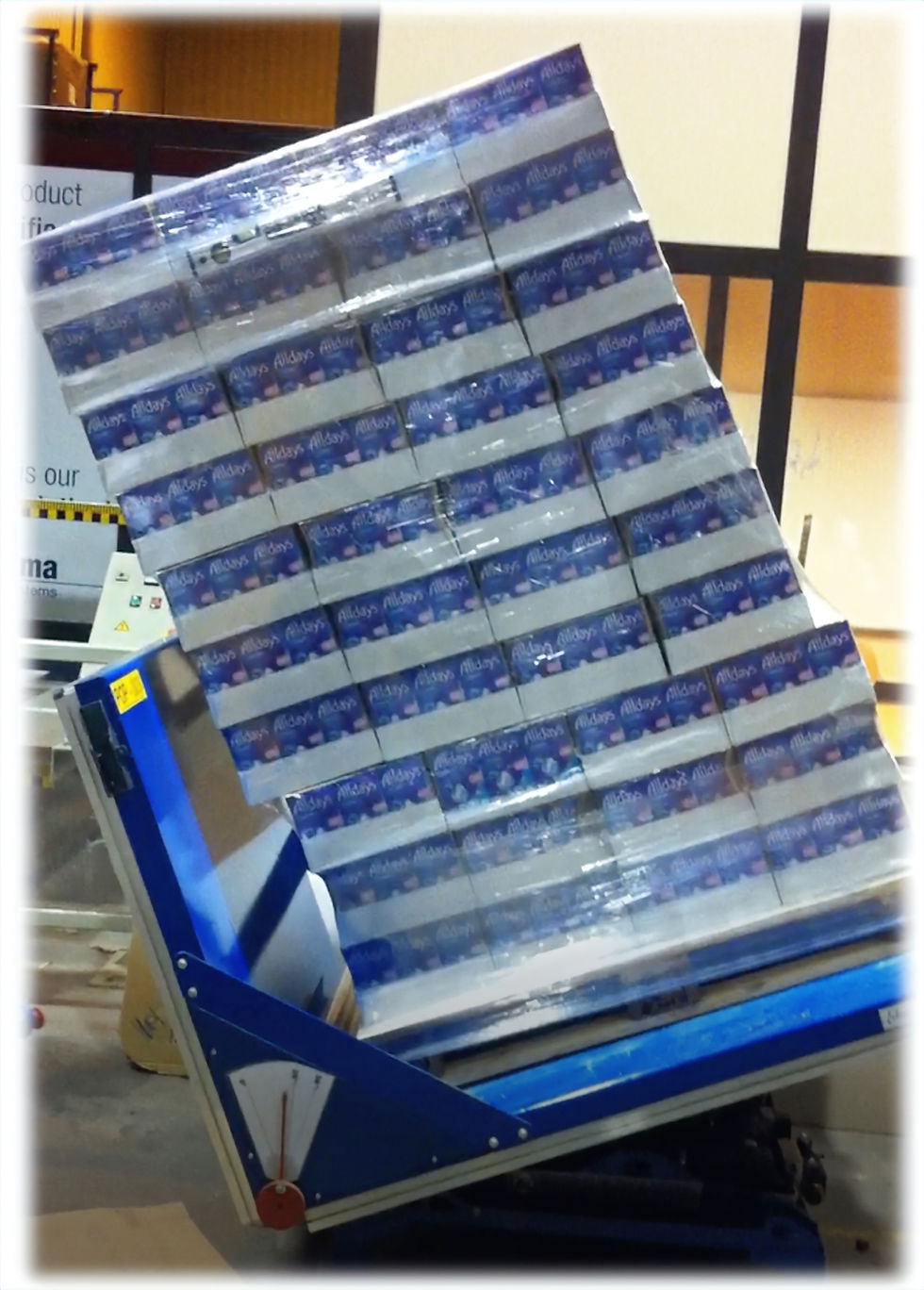
In many businesses, wrapping programmes are adjusted over time in an effort to improve productivity. One of the most common changes is reducing the number of film revolutions around a pallet to increase throughput and move more pallets through the operation each hour. On paper, this can appear to be a simple efficiency gain. However, what is often overlooked is the impact these changes can have on load stability throughout the distribution chain.
A pallet's wrapping pattern plays a critical role in keeping products secure during storage, handling and transportation. When wrap cycles are reduced without fully understanding the effect on the load, the result can be increased movement in transit, damaged products and avoidable costs.
One of the most common issues we encounter is a wrapping profile that leaves a visible "window" through the middle of the pallet. This is a clear indication that the top and bottom of the load are receiving significantly more film coverage than the centre section.
While the pallet may appear wrapped, the middle of the load is often the area most vulnerable to movement. During transportation, loads are subjected to acceleration, braking, cornering and vibration. If sufficient containment force is not applied throughout the entire load, products can shift, lean or become unstable.

Unfortunately, many wrapping patterns remain unchanged for years after they have been modified to increase production speed. In some cases, the original reasons for the changes have long been forgotten. The result is a wrapping programme that no longer reflects the requirements of the product, pallet configuration or distribution environment.
Effective pallet wrapping is about much more than simply applying film. It requires an understanding of the load, the packaging, the wrapping equipment and the journey the pallet will undertake. Every application should be assessed on its own merits to ensure the wrapping pattern provides the level of load containment required.
The reality is that there is no universal wrapping programme that works for every pallet. What works well for one product may be completely unsuitable for another.
At Load Integrity, we regularly assess pallet wrapping performance and identify opportunities to improve load stability, reduce risk and ensure wrapping programmes are aligned with operational requirements.
If you have concerns about pallet movement, damaged loads or the effectiveness of your current wrapping pattern, get in touch for a free initial evaluation and discussion.


Comments